I am a Christian. I believe in the God of the Bible, in God the Father, in His Son Jesus Christ, and in the Holy Spirit. I believe in Genesis 1:1 - "In the beginning God created the heavens and the earth. (NIV)" I am a biochemist and a pharmacist by education. As such I have a desire to understand nature. I am writing this blog as my way to express the facts of true science as I understand them, from the perspective of one who believes that all things were created by God, for God and for His purposes.

Feel free to comment, to offer your perspective, or to give suggestions for subjects.
Please take a minute to "Like" us on Facebook.

Friday, February 24, 2017

Searching Inward Part Three - Made in His Image

Now we have to look at why is man so much more intelligent, creative and insightful than other animals. Why do we seek to reason? Why do we have a moral compass? Why is it we want to understand why we are here? Why do we seek God? Do the other animals do this? Is this because we have been created in God's image? Does evolution allow for this possibility, that by natural selection we will reason and seek to know all that is around us?

We see in Genesis that God created man in His image:

Genesis 1:25-27 (NIV) - God made the wild animals according to their kinds, the livestock according to their kinds, and all the creatures that move along the ground according to their kinds. And God saw that it was good. 26Then God said, “Let us make mankind in our image, in our likeness, so that they may rule over the fish in the sea and the birds in the sky, over the livestock and all the wild animals, and over all the creatures that move along the ground.” 27So God created mankind in His own image, in the image of God He created them; male and female he created them.
Creación de Adán (Miguel Ángel)

So what does this mean? He did not say He created the animals or any other creature in His image, just man; "homo sapiens" as science defines man. Man is much like the animals in bodily form and function so being created in God's image has to mean more than just our physical attributes.


God created man in His image,
So that we may reflect the fruit of His Spirit.

We call this the Psychological Big Bang (self-awareness). This is the transition from the mechanical brain of simple life to the complexities of man's self-reflective mind. It is the question of morality and meaning, man's search for significance and purpose. Other animals have no apparent appreciation for what is true, good and beautiful. How do you get to the mind of a human from that of any lower life form? Even the lowest life forms have central nervous systems but none besides the human mind can contemplate, reason or create. How do you account for free will and introspection, humankind's existential drive to ask why? This is not even considered in evolutionary theory.

At the same time, we have the Cultural Big Bang. Humanoids (pre-human species like neanderthal man) had primitive tools and sometimes burials in shallow graves were found at their fossil digs. In contrast, human fossil digs have elaborate cave paintings, ornate jewelry, musical instruments, and ritual burial grounds. A dramatic advancement of cultural behavior occurred when humans appeared on the scene.

The creation of Man on the sixth day and God resting on the seventh day aligns here:

Genesis 2:2-3 (NIV) - "By the seventh day God had finished the work He had been doing; so on the seventh day He rested from all his work. 3Then God blessed the seventh day and made it holy, because on it He rested from all the work of creating that he had done."
God created man in His image and that is why man has free will and introspection, and wants to understand the world around him. God rested on the seventh day and made it holy to show us that we need to take time from our everyday lives to understand our purpose and to worship Him.

This is what makes man different from the other animals - reason, dexterity, ability to make complex tools, his emotions and cognitive abilities, compassion, intuition, a heart for God. This is the unique soul of man compared to that of the animals. This shows that man was not a product of random evolutionary chance but God personally created man in His image. Again, this is not referring to physical appearance and attributes but in psychological terms - spiritual, rational, relational and moral.

The letter to the Gallatians reflects the fruit of the Spirit (God's Image) as the qualities we should reflect in our lives.

Galatians 5:22-23 (NIV) - But the fruit of the Spirit is love, joy, peace, forbearance, kindness, goodness, faithfulness, 23gentleness and self-control. Against such things there is no law.
But we, as humans, do not reflect all that is God, however. God has qualities higher than those we can attain - self-existance (independence), immutability (changelessness), Infinite (limitless) and Eternal (timelessness). Also Holiness (perfection) because we have fallen short of the glory of God due to our sinful nature.
Romans 3:23-24 (NIV) - For all have sinned and fall short of the glory of God, 24and all are justified freely by His grace through the redemption that came by Christ Jesus.
Romans 6:23 (NIV) - For the wages of sin is death, but the gift of God is eternal life in Christ Jesus our Lord.
God desires that we strive to be like Him, all the while knowing we cannot achieve the goal in this life. He showers us with grace and mercy, bringing us closer to Him. He wants us to love Him, and show this to the world by how we love each other.

Mark 12:30-31 (NIV) - "Love the Lord your God with all your heart and with all your soul and with all your mind and with all your strength. 31The second is this: ‘Love your neighbor as yourself.’ There is no commandment greater than these.”

Tuesday, February 14, 2017

Happy Valentine's Day - Chocolate Sweets for Your Sweetheart - Revisited

I wrote this blog about chocolate fives years ago for Valentine's Day. I thought I would share it again.

======================================================================

"Drop the Chocolate and step away.  S-T-E-P  A-W-A-Y!"

Most all of us love the taste of chocolate, but for some it means someone may get hurt! Chocolate is a traditional Valentine's Day gift, in a heart shaped box, or in a heart shaped candy, wrapped in red foil. As Charles M. Schulz said: "All you need is love. But a little chocolate now and then doesn't hurt."

Chocolate comes from the seed of the tropical Theobroma cacao tree. Cacao has been cultivated for at least three thousand years in Mexico, Central and South America. The Aztecs made it into a beverage known as xocolātl, a word meaning "bitter water". The seeds of the cacao tree have an intense bitter taste, and must be fermented to develop the full flavor of chocolate.

Much like coffee beans, the cocao beans are then dried, roasted, and ground to form cocoa mass, a pure chocolate called chocolate liquor. The liquor contains two principle ingredients: cocoa solids and cocoa butter. Cocoa solids contain theobromine, a methylxanthine alkaloid chemically similar to caffeine with like physiological effects.


"Life is like a box of chocolates.
You never know what you're gonna get."
Forrest Gump (1994)

There are numerous types of chocolate made by mixing four ingredients, cocoa solids, cocoa butter, sugar, and milk solids in varying proportions. Additional agents such as lecithin (an emulsifier), vanilla and vegetable oils increase the possible formulations. Here are some of the most common forms used:

Chocolate(bgFFF) Unsweetened chocolate: Also known as “bitter” or “baking” chocolate. It is unadulterated chocolate: the pure, ground, roasted cocoa beans rendering a strong, deep chocolate flavor.

Bittersweet chocolate: A dark chocolate that contains at least 35% cocoa solids. Most bittersweet bars contain at least 50% chocolate liquor, with some bars pushing 70-80% chocolate liquor. This chocolate has a deeper, more bitter flavor than sweet dark or semi-sweet chocolate.

Semi-sweet chocolate: A dark chocolate containing at least 35% cocoa solids but is sweeter than bittersweet due to additional sugar.

Sweet dark chocolate: A “dark chocolate” as it does not contain milk solids, but with a high percentage of sugar so it is much sweeter than other types of dark chocolate. Many brands of sweet dark chocolate have only 20-40% cocoa solids.

Milk chocolate: In addition to containing cocoa butter and chocolate liquor, milk chocolate contains either condensed milk or dry milk solids. Milk chocolate must contain at least 10% chocolate liquor, 3% butterfat, and 12% milk solids. Milk chocolates are typically much sweeter than dark chocolate, and have a lighter color.

White chocolate: White chocolate does not contain chocolate liquor or any cocoa products other than cocoa butter. It must contain a minimum 20% cocoa butter, 14% milk solids, and a maximum of 55% sugar.

Chocolate has become one of the most popular foods in the world. It is also used to produce chocolate milk and hot chocolate. The Europeans were the first to sweetened and fattened it by adding refined sugar and milk, two ingredients unknown in the Americas at that time. In the 19th century, Briton John Cadbury developed an emulsification process to make solid chocolate, thus creating the modern chocolate bar.

Chocolate off the store shelf can have whitish spots on the dark chocolate. This is called chocolate bloom and is not an indication of chocolate gone bad. Instead, this is just an indication that the sugar and/or fat has separated due to poor storage. Chocolate must be tempered at specific temperatures to create the right crystalline structure and then properly stored to maintain its composition. Heating or cooling the chocolate outside of its temperature profile can result in this type of separation. Chocolate can also absorb flavors from other foods so should be stored in tightly sealed containers.

A big plus for all of us chocolate lovers is that dark chocolate and cocoa butter have been linked with multiple positive effects. Scientific evidence suggests dark chocolate can help decrease the possibility of a heart attack or other cardiovascular problem when consumed regularly in small amounts and reduces blood pressure in both overweight and normal adults. Finally, studies have shown dark chocolate as part of a low-fat diet can lower cholesterol levels in adults.

So I hope you did not forget your sweetheart this Valentine's Day and bought her a box of her favorite health food, Chocolate!

Song of Songs 7:6 (NKJV) - How fair and how pleasant you are, O love, with your delights!

Thursday, February 9, 2017

Searching Inward Part Two - The Life within Us

Back in the summer of 1993, I was on a road trip around the western United States with three of my kids and while staying in Salt Lake City we decided to take in a new movie that had just come out, Jurassic Park. I am sure most of you have seen it or at least heard of the dinosaurs gone wild adventure. It was the greatest GMO experiment, science fiction in that day but science fact today. They found a mosquito captured in a ball of amber and extracted dinosaur DNA from the blood in the belly of the bug, cloning it into true living dinosaurs for an island theme park. This movie hits on several things we will be looking at today in our blog, the dinosaurs and DNA. T-rex fossil Jane by Volkan Yuksel DSC08683g

First let’s go back to the last blog entry about the Cambrian Explosion that occurred about 540 million years ago. Since then, there have been five major mass extinction events with the last one happening about 65 million years ago when the dinosaurs became extinct. This extinction was possibly due to two catastrophic events occurring one right after the other, a massive volcanic eruption followed by a gigantic asteroid slamming into the Yucatan peninsula. These two events covered the earth with hundreds of feet of ash and soot - laying down a geological layer that would wipe out the dinosaurs and produce large oil and gas pockets. Without the mass extinction of these fierce reptiles, we would not have the oil that has driven our industrial revolution over the last 200 years. God used all of these events for a purpose. People often ask if God just wanted to make man, why so much wasted space or life or whatever, but He had a reason and a purpose for all that He did in His creation. All of it was necessary, even though we might not know why now - Prov 25:2 (KJV) - It is the glory of God to conceal a thing: but the honour of kings is to search out a matter.

So now today we will look at what makes life so special. Just in terms of advanced life forms, including man, the physical being of the structure of life is extremely complex. We learn new things daily about how wondrous the cell is and how bringing millions and billions and trillions of cells together, a functional being results. All multi-celled life forms have an array of cell types that function in different ways but come from one cell. Even the simplest of organisms is indeed complex.

But let’s go back to the DNA part of the story first. Human DNA has a sequence of over 3 billion letters (A-Adenine, G-Guanine, C-Cytosine and T-Thymine). Only 5% of our DNA contains the codes for the 10,000+ proteins used in our bodies. The rest was once considered junk DNA but science has now determined that up to 80% of this remaining DNA actually controls how and when the proteins are made and what the cell form will be. The DNA string is wrapped up tightly in coils and stored in every single cell in our bodies. This allows the 3 billion base pairs in each cell to fit into a space just 6 microns across (the cell nucleus). If you stretched the DNA in one cell all the way out, it would be about 6 feet long and all the DNA in all of your cells put together end to end would be about twice the diameter of the Solar System.


Biologists must constantly keep in mind that what
We see was not designed, but rather evolved.
Frances Crick - referencing the DNA double Helix

DNA stores all the information to make you, in each and every cell. In fact, science can now tell a lot about your origin and ancestry by looking at your DNA. You can even send in a kit with a sample of your tissue and get back an analysis that will tell where your ancestors came from. Science has even been able to get DNA from fossils and sequence it and trace the lineage of the fossil. Neanderthal man is a case in point. Once thought to have been our direct ancestor, he has now been shown not only to not be directly related but actually from a different chain in the genus Homo. DNA testing shows that humans have some Neanderthal DNA but possibly it comes from interbreeding or a common ancestor farther back. DNA shows most, if not all mankind (homo sapiens) has one ancestor (Adam or mitochondrial Eve?).

DNA has built-in mechanisms to prevent errors in coding - there are 64 possible 3 nucleic acid strings (such a string specifies one amino acid in the protein being formed) and only 20 amino acids used in our genetic code to produce proteins. Most amino acids have more than one three character code and the extra sequences are used to help with error correction by preventing minor mutations from changing the resulting protein.

But it is not fool proof. Even a single amino acid error can sometimes produce a disorder as in Sickle Cell disease. The DNA mutation of a single nucleotide of the hemoglobin gene results in glutamic acid being substituted by valine at position 6 in hemoglobin's beta protein strings of 146 amino acids (hemoglobin is made up of 2 alpha and 2 beta protein strings totaling 574 amino acids). This occurs when the A (Adenine) in the DNA three letter sequence GAG, which translates to glutamic acid in the protein, is substituted with T (Thymine), changing the sequence to GTG which translates to valine. This is normally a benign mutation, causing no apparent effects on the structure of hemoglobin in conditions of normal oxygen concentration. What it does allow for, under conditions of low oxygen concentration, is the sickle formation of the red blood cells due to the genetically different hemoglobin molecule whose shape is changed by this one amino acid error.

Science now can modify the DNA of a single cell organism, typically a bacterium, and have it produce a new or modified protein. This is called recombinant DNA (rDNA) technology. A great example using this technology in the healthcare field is the development of rDNA human insulin. Previously insulin for human use was extracted from beef and later from pork. Although these worked, they could cause allergic reactions. Insulin is a protein made up of two chains totaling 51 amino acids - beef has three different amino acids and pork has one compared to human insulin and yet our bodies can tell the difference. Now with rDNA produced human insulin, these adverse effects are a thing of the past.

DNA Structure+Key+Labelled.pn NoBB Francis Crick, the scientist who deciphered the double helix of DNA, said of his work: "Biologists must constantly keep in mind that what we see was not designed, but rather evolved." He also said: "An honest man, armed with all of the knowledge available to us now, could only state that in some sense, the origin of life appears at the moment to almost be a miracle, so many are the conditions which would have to have been satisfied to get it going."

Scientists have tried to take this one step farther and create life in the lab. They made a synthetic organism, but it was no primordial goo that happened to come alive. It took scientists hundreds of hours using computers and other very sophisticated equipment, cost over $40 million dollars and 15 years of work. Certainly not a simple process and the end result was not alive. Although it did function in some respects, it could not produce, or reproduce, the complex molecules needed to sustain and duplicate life.

Doctor David Deamer, one of the scientists involved in this work, published an article where he listed the following 12 specific steps needed to create the simplest form of life.

Defining artificial life: What would such a system do? We can answer this question by listing the steps that would be required for a microorganism to emerge as the first cellular life form on the early Earth:

  1. Boundary membranes self-assemble from soap-like molecules to form microscopic cell-like compartments.
  2. Energy is captured by the membranes either from light and a pigment system, or from chemical energy, or both.
  3. Ion concentration gradients are maintained across the membranes and can serve as a major source of metabolic energy.
  4. Macromolecules are encapsulated in the compartments but smaller molecules can cross the membrane barrier to provide nutrients and chemical energy for primitive metabolism.
  5. The macromolecules grow by polymerization of the nutrient molecules.
  6. Macromolecular catalysts evolve that speed the growth process.
  7. The macromolecular catalysts themselves are reproduced during growth.
  8. Genetic information is encoded in the sequence of monomers in one set of polymers.
  9. The information is used to direct the growth of catalytic polymers.
  10. The membrane-bounded system of macromolecules can divide into smaller structures that continue to grow.
  11. Genetic information is passed between generations by duplicating the gene sequences and sharing them among daughter cells.
  12. Occasional mistakes (mutations) are made during replication or transmission of information so that the system can evolve through natural selection.

After considering this list, he said: "Looking down this list, one is struck by the complexity of even the simplest of life. This is why it has been so difficult to ‘define’ life in the usual sense of a definition – that is, boiled down to a few sentences in a dictionary. Life is a complex system that cannot be captured in a few sentences, so perhaps a list of its observed properties is the best we can ever hope to do." (emphasis mine).

What did the cell look like to scientists when Darwin first proposed evolution? It was protoplasm and a nucleus. What sparks a single cell to split and differentiate into a myriad of cell types - in humans, hearts and lungs and brains and... Is it just the pressure of "survival of the fittest (natural selection)?” How does the DNA know that for this cell in this place it needs to be a nerve cell? All cells carry the full gene complement to produce any cell in the body but surroundings somehow tell a cell to be special.

Life is extremely complex. Could this all happen by chance, by the pressure of natural selection, in just 3.8 billion years, with all that the earth has gone through during that time? Science says this happened by chance, not because they know it does but because they have no other theory for it, and they cannot say God because He does not exist in the physical realm scientifically, nor can He be proven or dis-proven by science. In my mind he can and does exist and it is for each of us to decide for ourselves what we believe. The evidence is there.

With this, we are just scratching the surface. The cell is full of complex systems, not just the DNA that directs it or the proteins that run it. There are numerous other features, such as mitochondria and ribosomes, and numerous other chemical reactions, such as the Krebs cycle and active transport of nutrients, that must function to get the job of life done. God is amazing!

Romans 1:20 (NIV) - For since the creation of the world God’s invisible qualities—his eternal power and divine nature—have been clearly seen, being understood from what has been made, so that people are without excuse.

Tuesday, January 10, 2017

Searching Inward Part One - The Life Around Us

So we have shown that the Earth is very possibly the only planet in the Universe that can support life as we know it. Now we move on to the next part of our series:

Searching Inward - Psalm 139:13 (NIV) "For you created my inmost being; you knit me together in my mother's womb." - Finding God in the formation of life and the human body.

We will start our search first with a look at what we consider as life and how secular science views the process of evolution, from the beginning of life to the great diversity we see around us. I believe, as a Christian, that God created all life but that does not preclude Him using that which He designed, i.e. genetics, to bring about parts of His Creation. Much like how we showed that God nurtured (The Hebrew word "râchaph") the Universe and the Earth to make it ready for life, He certainly could do the same to fine-tune the life He created.

So, what is life anyway? Within science there is no one clear definition of life that is accepted by all but most consider life to contain these characteristics:

Living things are organisms that display the ability to grow, reproduce, take in and use energy, excrete waste, respond to the environment, and possess an organized structure more complex than that of non-living things.

At the border of living versus non-living things are viruses and single celled bacteria. Viruses are not really "alive" based on our definition but are more like a computer that runs a machine that makes more computers. On their own, they can not grow, reproduce, or take in and use energy, these functions are carried out by the host cell they infect. Viruses have been described as "organisms at the edge of life." They consist of genetic material made from either DNA or RNA, a protein coat, called the capsid, which surrounds and protects the genetic material and, in some cases, an envelope of lipids that surrounds the protein coat.

Viruses are extremely complex biological particles. So even if on the edge of life, they seem much too complex to happen by chance. Science considers the evolutionary history of viruses to be unclear, possibly coming from bacteria or plasmids, small DNA fragments that can move between cells. They are considered an important means of horizontal gene transfer, infecting and potentially modifying DNA in the host cell, which can increase genetic diversity.
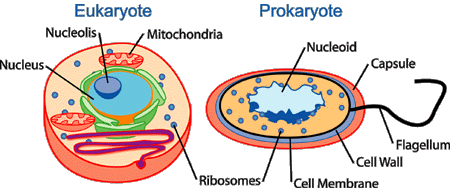
CelltypesBacteria are prokaryotic microorganisms, being single celled and not containing a membrane-bound nucleus, the simplest form of life. They were among the first life forms to appear on Earth, and are present in most of its habitats. Here again, these organisms are extremely complex, more so than viruses, and seem highly unlikely to form by the random chance interactions of molecules, many of which themselves are complex and had to form randomly. As mutations did not occur at this stage in the proposed evolutionary process, bacteria are assumed to have been randomly formed from protocells, a self-organized, endogenously ordered, spherical collection of lipids. Science has yet to demonstrate how a protocell could be formed.

So the scientific expectation is that simple molecules formed from the elements under the harsh conditions of the early Earth via chemical reactions. These molecules then continued to become more complex until such a time as they formed amino acids (proteins), nucleic acids (DNA and RNA) and lipids (fats). These molecules can be formed by chemical reactions under specific conditions, but did these conditions exist on the early Earth and if so, would these reactions occur with sufficient frequency and consistency to produce these protocells? Again this seems unlikely.

Would these protocells, if they formed, then spontaneously combine in such a way to make a living cell? At what point does this non-living mass of molecules become able to function independently and to reproduce itself? The odds of this happening seem even greater than the odds that Earth would be capable of supporting life. The second law of thermodynamics requires that the universe move in a direction in which disorder (or entropy) increases, yet life is distinguished by its high degree of organization.

If we look past this dilemma and assume that prokaryotes formed, then we need to next move to the eukaryotes. Eukaryotes are organisms with a more complex cellular structure and many cells. Most plants and animals are eukaryotes. Now here science utilizes mutations to make this leap so lets look at the definitions.

Mutation: Random alterations to the DNA sequences that make up genes and which are passed from one generation to the next. Mutations are key to the evolutionary process, being the major source of microevolutionary changes.

Microevolution: Changes in the gene pool (primarily mutations) of a population over time which result in relatively small changes to the organisms in the population. Changes which would not result in the newer organisms being considered as different species. Examples of such microevolutionary changes would include a change in a species' coloring, size or bodily processes.

Macroevolution: Changes in organisms which are significant enough that, over time, the newer organisms would be considered an entirely new species. In other words, the new organisms would be unable to mate with their ancestors or reproduce as the older organism, assuming we were able to bring them together. Macroevolution is thought to happen when sufficient microevolutionary changes occur, resulting in a new species.

Natural Selection: The process by which traits that are favorable in a given environment become more common in subsequent generations, and traits that are less favorable become less common. This is considered a significant source of microevolutionary changes that can lead to macroeveolution. It is one process that works against mutational randomness by preferential selection of the "better" genetic change. An example in bacteria would be the development of resistance to antibiotics.

As we look at these processes and how they might occur and lead to more diverse genetics and the growth of the evolutionary tree, there seems to be some difficulties. One primary difficulty is the amount of time needed for evolutionary changes to occur and what the fossil record shows for the appearance of advanced life. Is there enough time from the formation of the earth until now to allow for all the diversity we see?


Was there enough Time for Evolution?
Or did God "Nurture" it along?
As He did with the formation of the Universe.

Earth formed 4.5 billion years ago and life started 3.8 billion years ago. But up until the Cambrian Explosion, which started about 452 million years ago, most life was prokaryotic (single celled) or organized into colonies. The Cambrian explosion was a period in the fossil record lasting anywhere from 2 to 50 million years, where there was the sudden appearance and diversification of almost every major group (phylum) of animal life (multicellular, eukaryotic organisms). Plants started to develop at about the same time but the rate of changes in diversity was slower than that observed for animals. Was this enough time for the massive changes in structure to occur from prokaryotes to advanced eukaryotes?

Some challenges that the Cambrian Explosion brings to evolution are (from Reasons to Believe):

  1. While evolutionary scenarios, as opposed to worked-out theories, exist for hypothesizing how new genera, new orders, and new families of animal life might appear, there is no rational evolutionary scenario for explaining how a new animal phylum might appear.
  2. From 50 to 80 percent of the animal phyla known to have existed at any time in Earth’s history appeared within no more than a few million years of one another, as the Cambrian geological era began.
  3. Of the 182 animal skeletal designs theoretically permitted by the laws of physics, 146 appear in the Cambrian explosion fossils.
  4. The Cambrian explosion marks the first appearance of animals with skeletons, bilateral symmetry, appendages, brains, eyes, and digestive tracts that include mouths and anuses.
  5. Virtually every eye design that has ever existed appears simultaneously in the Cambrian explosion.
  6. The moment oxygen levels in Earth’s atmosphere and oceans permit the existence of Cambrian animals, they suddenly appear.
  7. The Cambrian explosion occurs simultaneously with the drastic change in sea chemistry known as the Great Unconformity.
  8. The Cambrian explosion includes the most advanced of the animal phyla, chordates, including vertebrate chordates.
  9. Both bottom-dwellers and open ocean swimmers appear simultaneously in the Cambrian explosion.
  10. Optimization of the ecological relationships among the Cambrian animals, including predator-prey relationships, occurred without any measurable delay.

Fossils found in Yunnan province of China (at sites discovered nearly 100 years ago) and in the Burgess Shale deposits of the Canadian Rockies tell us that all animal phyla (more than 70) ever to exist in Earth’s history appeared “at once” during the Cambrian Explosion. Some 40 phyla have since disappeared and not a single new one has appeared since. This “burst” of life occurred in an extremely narrow window of geologic time, about 5-10 million years. Evidence from the Yunnan sites possibly narrows this window to less than 3 million years. Could 90+% of life have evolved in just 3 million years?

So the question becomes again, are the scientific theories of life's origin statistically possible in the context of the natural law of probability? When Darwin proposed his theory of evolution, the cell was barely visible under a primitive microscope. Scientists thought of it as only a blob of protoplasm. They could not see or know the vast complexity that is a living cell.

Up until the mid-twentieth century, science had considered the universe as eternal. This offered infinite time for infinite evolution and made probability considerations irrelevant. But then science moved to the big bang theory, which states that the universe had a beginning, limiting time for evolution. These time limitations make probability considerations crucial. It is statistically improbable that life as we know it could arise from a primordial soup in even a billion years. Given that, if life should appear, the current scientific theory then predicts a gradual evolutionary process in which simpler life-forms would be expected to appear first, followed by the more complex. Instead, the fossil record suggests "punctuated equilibrium" - long periods of stability followed by short bursts of change.

God could have again nurtured (The Hebrew word "râchaph") His creation, even manipulating the genes He created, in such a way as to "punctuate" life (and thus the fossil record) with rapid spurts of diversity in physical form and function. Molecular biologist Kenneth R Miller suggested as much when he said:

"A clever and subtle God [might] influence events in ways that... could include the appearance of mutations. ...Enormous changes in physical systems can be brought about by unimaginably small changes in initial conditions [which] could serve as an undetectable amplifier of divine action."

Psalm 104:27-31 (NIV) - "All creatures look to you to give them their food at the proper time. 28When you give it to them, they gather it up; when you open your hand, they are satisfied with good things.29When you hide your face, they are terrified; when you take away their breath, they die and return to the dust. 30When you send your Spirit, they are created, and you renew the face of the ground. 31May the glory of the LORD endure forever; may the LORD rejoice in his works!"

Saturday, December 31, 2016

A New Years Resolution Revisited - The Chemistry of New Beginnings

On this day five years ago I wrote this entry about New Years Resolutions. With the rough and tumble year we just went through - from sports (Chicago Cubs) to politics (presidential election) to world events (terrorism) - I think this post is still, if not more, relevant today for 2017.

Tonight at Midnight, for most of the World anyway, the year will click over to 2012. And with it the opportunity for a fresh start, a new beginning if you will. In our physical world of time and space everything has a beginning. The day has a beginning, as does the month and the year. We had a beginning at our conception and then our birth. Our Nation and all of the nations of the world had beginnings at some point in the history of mankind. And all creation had a beginning, at the Big Bang when God spoke the Universe into existence - Genesis 1:1ff (NIV).

For many, tonight will be a night to celebrate - party with friends, watch the ball drop in Times Square or the fireworks in Sydney or Hong Kong. Some will party too much and regret it tomorrow. For some they will meet their end before they can even begin the new year. For all of us, we need to look at the new year and this time of new beginnings as an opportunity for change. Change for the world (World Peace), change for our country (an improving economy) and change for ourselves (make a lifestyle improvement).

Every year many of us make new years resolutions, and many of us fail to keep them, in spite of our best efforts. Estimates show that about 62% of all adult Americans make at least one new years resolution. Of these 75% last a week, 64% a month and 46% last for 6 months. Only 8% keep their resolution for the full year. Even with the poor odds of keeping your resolution for the full year research shows that people who make resolutions are 10 times more likely to attain their goals than people who don't. There is something about having specific, written goals that helps to keep us on track. It gives us an identified target to reach and a sense of hope that when we do reach it, we will be better for having made the effort.


Character is the ability to carry out a good resolution
long after the mood in which it was made has left you.
Cavett Robert

To keep a resolution well made requires hard work and determination. As the quote implies, many a resolution is made without forethought as to how it will be carried out. We have all heard the story of "the boy who cried wolf." When he finally spoke the truth he was not believed. If we make lighthearted resolutions and then do not keep them, it is a reflection on our character.

The concept of character implies a variety of attributes including the existence or lack of virtues such as integrity, courage, fortitude, honesty, and loyalty, or of good behaviors or habits. The Bible defines character as any behavior or activity that reflects the character of God. The Book of Genesis (Genesis 1:26ff NIV) says that God created man in His own image. Consistency of character is regarded as integrity - the honesty and truthfulness or accuracy of one's actions. We are judged to "have integrity" to the extent that we act according to the values, beliefs and principles we claim to hold.

So as we make those same resolutions again this year - lose weight, get fit, quit smoking/drinking - lets make a resolution together much like the one expressed on the left side of the card above: Live a simple, sincere life... cultivate cheerfulness and charity... be frugal in expenses, careful in conversations, diligent in service... and have a child-like trust in God to care for us in all things.

Happy New Year!

Ephesians 4:31-32 - "Get rid of all bitterness, rage, anger, harsh words, and slander, as well as all types of evil behavior. 32Instead, be kind to each other, tenderhearted, forgiving one another, just as God through Christ has forgiven you. (NLT)"