I am a Christian. I believe in the God of the Bible, in God the Father, in His Son Jesus Christ, and in the Holy Spirit. I believe in Genesis 1:1 - "In the beginning God created the heavens and the earth. (NIV)" I am a biochemist and a pharmacist by education. As such I have a desire to understand nature. I am writing this blog as my way to express the facts of true science as I understand them, from the perspective of one who believes that all things were created by God, for God and for His purposes.

Feel free to comment, to offer your perspective, or to give suggestions for subjects.
Please take a minute to "Like" us on Facebook.

Monday, April 25, 2016

Artificial Sweeteners - Getting to Zero

www.sciencenews.org

America eats too much! So what is the solution? Eat less? Eat healthier? For some maybe, but for most of us it is now to use zero or low calorie sweeteners in place of those natural sweeteners we discussed in the last two blogs ("How Sweet it Is!" and "Are Nature's Other Sweeteners Better?") to help reduce our calorie intake without cutting out of our diet the things we love. So today we will discuss the most common non-carbohydrate sweeteners. They are often called artificial sweeteners but several are actually from natural sources (made from naturally occurring organic compounds).

The list includes - Saccharin, Cyclamate, Aspartame, Stevia, and Sucralose - the five most common artificial sweeteners used in the United States today.

Artificial Sweeteners

Scientific
Name
Sweetness (by weight) Trade Name FDA Approval
Status
Notes
Saccharin 300 Sweet'N Low 1958
Cyclamate 30-50 SugarTwin Banned 1969 Approved outside of USA
Aspartame 200 NutraSweet 1981 Amino Acid based
Aspartame-Acesulfame 350 Equal Original, TwinSweet 1988 --
Neotame 9000 NutraSweet (mfg) 2002 Chemically similar to Aspartame
Stevia 150 Truvia -- Naturally derived plant sweetener
Sucralose 600 Splenda, Kaltame 1998 Sugar Alcohol
Advantame 20000 -- 2014 --

Many people trying to get off sugar think they can still have their cake and eat it, too. Most use artificial sweeteners for one of two reasons: weight loss or trying to reduce sugar cravings. Sadly, artificial sweeteners do not accomplish these health goals: they can make your sweet cravings worse, resulting in you consuming more carbs or calories than before. Artificial sweeteners actually increase cravings by continuing your addiction to super-sweet tasting foods. It only takes 3-6 weeks of complete abstinence from sweet tasting substances to eliminate your sweet cravings (psychological cravings will remain). You simply have to avoid all sweet tasting foods (including artificial sweeteners) during this time and your cravings will subside.

Artificial sweeteners may also cause your blood insulin to rise, although this has not been proven. When insulin levels rise, your blood sugar levels decrease. Low blood sugar causes you to crave sugar and eat more. Studies have shown that people who consume artificial sweeteners eat more calories than people who don’t, possibly for this reason. Additionally, this rise in insulin signals your body to store fat or not use it as fuel. So, the weight stays on your body.

Some studies show that you may be able to blame it on the bugs in your gut. Some artificial sweeteners appear to dramatically change the makeup of the gut microorganisms, mainly bacteria, that are in the intestines and help with nutrition and the immune system. There are trillions of these gut bacteria - many times more than the number of cells in your body. All these physiological changes also have the potential of slowing your metabolism, resulting in increased storage of body fat.

All of this to say that although some artificial sweeteners may be safe and most have no calories, they are not as helpful as they appear when it comes to weigh loss and cutting down carbohydrate intake. In fact, they may alter the brain's natural response to sweet tastes, resulting in a decrease in the bodies ability to know when enough calories have been consumed. It is best to reduce sugar and carbohydrate intake by reducing or eliminating sweet cravings (and sweet tasting foods) from your diet.


Artificial Sweeteners can increase cravings for sweet foods
Resulting in eating more calories than before.

Saccharin (Sweet'N Low)

Saccharin was the first artificial sweetener and was originally synthesized in 1879. Its sweet taste was discovered by accident. It is 300 to 500 times as sweet as sugar and is often used to improve the taste of toothpastes, dietary foods, and diet beverages. The bitter aftertaste of saccharin is masked by blending it with other sweeteners.

Fear about saccharin increased in 1960 when a study showed a possible link to bladder cancer in laboratory rats. Further studies later showed that saccharin causes cancer in male rats by a mechanism not found in humans. In 2001 the United States repealed the warning label requirement, and in 2010 the EPA stated that saccharin was no longer considered a potential hazard to human health. It is available in the United States and is making a comeback.

Saccharin itself has zero calories per gram and has a Glycemic Index index of zero, meaning it does not raise body sugar levels. It is usually blended with other sweeteners to mask its metallic taste. These other sweeteners are sometimes sugars, such as dextrose, and can add a few calories to the final product.

Saccharin is a sulfa-based sweetener. Reported side effects include allergic reactions for those with sulfa allergies, nausea, diarrhea, skin problems or other allergy-related symptoms. Saccharin is not metabolized in the body and is rapidly eliminated in the urine. The quantity of saccharin in a typical diet soda (12 ounces) is about 100 milligrams.

Cyclamate

In the United States, the Food and Drug Administration (FDA) banned the sale of cyclamate in 1969 after lab tests in rats indicated that large amounts of cyclamates could cause bladder cancer. Cyclamates are still used as sweeteners in many parts of the world, including Europe. It is marketed as Sugar Twin and Sweet'N Low in Canada.

Cyclamate has zero calories per gram and has a Glycemic Index index of zero, the same as saccharin. It is usually blended with saccharin which produces a more "sugar-like" taste. Cyclamate is not absorbed by the body and is probably safe in small quantities. It has been used for about 70 years and despite the fears, no side effects have been reported in humans. It is now believed not to cause cancer directly, but may increase the potency of other carcinogens so it is best to avoid this sweetener.

Aspartame (NutraSweet)

Aspartame was discovered in 1965 at the G.D. Searle company. A chemist was working on an anti-ulcer drug and accidentally spilled some aspartame, an intermediary product in generating a tetrapeptide of the hormone gastrin, on his hand. When he licked his finger, he noticed that it had a sweet taste.

Aspartame is derived from the two amino acids aspartic acid and phenylalanine. It is about 200 times as sweet as sugar. It is not stable when heated so is used as a tabletop sweetener or in frozen desserts, gelatins, beverages, and chewing gum. When cooked or stored at high temperatures, aspartame breaks down into its constituent amino acids.

This is also its metabolic path in the body. It is broken down into L-Aspartic Acid, L-Phenylalanine and Methanol. L-Aspartic Acid and L-Phenylalanine are two of the 23 amino acids our bodies use to build protein. L-Aspartic Acid can be manufactured by our bodies, so it is not an "essential" amino acid. L-Phenylalanine is considered "essential" and must be included in our diet. The genetic disorder, PKU or Phenylketonuria, is a disorder of the metabolism of Phenylalanine and requires those with this condition to closely monitor their intake of this amino acid. Too much Phenylalanine in the diet of someone with PKU can lead to intellectual disability, seizures, and other serious medical problems.

Aspartame is metabolized fully in the digestive tract and is not absorbed intact. L-Aspartic Acid and L-Phenylalanine are found naturally in many proteins and thus we routinely consume these in our diet. A typical "dose" of Aspartame found in a diet soda is about 180mg. This is equivalent to about 70mg of L-Aspartic Acid and about 90mg of L-Phenylalanine. A 12 ounce glass of milk contains about 1140mg of L-Aspartic Acid and about 650mg of L-Phenylalanine.

The third metabolite of aspartame is methanol. Here is where much of the controversy is centered. A typical diet soda produces about 20mg of methanol when the aspartame is broken down. Methanol is a toxic substance and when consumed in large quantities (adult doses in excess of 10 grams per day) can cause blindness and other serious complications. But with the diet soda the quantity is very low. Methanol is oxidized sequentially to formaldehyde, then to formic acid and finally to carbon dioxide. These three chemicals are found in many fruits and vegetables and/or are produced within the body or by gut bacteria as breakdown products of metabolism. The body has a means to eliminate the small amount of methanol produced without harm. A 12 ounce glass of orange juice contains about 36mg of methanol, or about twice that found in a similar serving of diet soda. The bodies own metabolic processes can handle several grams per day of methanol without toxic effects.

The safety of aspartame has been studied extensively, including animal studies, clinical and epidemiological research, and post marketing surveillance. Aspartame is one of the most rigorously tested food ingredients to date. Aspartame has been deemed safe for human consumption by over 100 regulatory agencies in their respective countries.

There are claims of many adverse reactions to aspartame, including increased risk of cancers and multiple sclerosis. Others claim that the amino acids in aspartame are chemically manipulated or the amount of methanol produced is toxic. There does not seem to be any hard scientific evidence to support these claims. The amino acids are joined as they would be in any protein and the amount consumed, even from drinking numerous diet soda a day, is not outside of what would be found in proteins from a typical diet. As mentioned above, the quantity of methanol is very low and easily handled by our bodies existing metabolic processes. The one area of concern, as with all artificial sweeteners, is the undocumented possibility that consuming "sweet" substances my alter our bodies processes for recognizing caloric intake and possibly causing an increase in sugar cravings with a subsequent increase in consumption.

A typical diet soda with Aspartame alone contains about 180 mg of aspartame. When combined with Acesulfame, it drops to about around 120 mg. Since aspartame is basically a "protein", consisting of two amino acids, it contains approximately 4 calories per gram, or essentially zero calories in a 12 ounce diet soda. Aspartame has a Glycemic Index of zero.

Aspartame & Acesulfame Potassium (Equal Original, TwinSweet)

Acesulfame potassium (Ace-K) is 200 times sweeter than sucrose and has a slightly bitter aftertaste. It is often blended with other sweeteners (usually aspartame or sucralose), which give a more sucrose-like taste, whereby each sweetener masks the other's aftertaste and also exhibits a synergistic effect in which the blend is sweeter than its components.

Unlike aspartame, acesulfame potassium is stable under heat, allowing it to be used in baking or in products that require a long shelf life. It is also used as a sweetener in protein shakes and pharmaceutical products, especially chewable and liquid medications, where it can make the active ingredients more palatable.

One of the major concerns expressed about this sweetener is that it contains methylene chloride, a known carcinogen. Methylene Chloride is used as a solvent in the manufacture of acesulfame but is tested for in the final purity testing of acesulfame and is not detected. The limits of testing for methylene chloride is 40 parts per billion, so the maximum undetected would be 0.0016 micrograms (1 millionth of a gram) in a 12 ounce diet soda. Actual quantity of methylene chloride present is probably much less since it is a highly volatile substance and would be lost during final synthesis of acesulfame. Methylene Chloride is metabolized in the liver and human systems are capable of handling these amounts of methylene chloride safely. Although it is best to avoid exposure when possible, methylene chloride is found in other foods at higher concentrations, such as beer, decaf and some spices as well as in the background air (exposure as high as 30-300 micrograms per day).

Acesulfame is not metabolized by the body and is excreted mainly via the kidneys (95%) with the remainder in the feces. One minor breakdown product is acetoacetamide. In large doses, it has been shown to affect the thyroid in rats, rabbits, and dogs. This may be one reason to avoid this no calorie sweetener however exposure to this breakdown product is almost negligible from acesulfame used as a sweetener.

Of all the artificial sweeteners, acesulfame-K has undergone the least scientific scrutiny and other sweeteners are available so this may be one to use in moderation, if at all, for now.

Neotame

Neotame is not sold to the consumer market. Food producers mainly use it. It is chemically related to aspartame, but the difference confers greater chemical stability, enabling this new sweetener to be used in baked foods. It is not metabolized into its related amino acids, as aspartame is, and is eliminated quickly. It is de-esterified and eliminated in the urine and feces. Neotame is 7,000 to 13,000 times as sweet as sugar, depending on the use, and 40 times sweeter than aspartame so the dose needed is significantly less than with other sweeteners. It has zero calories and a Glycemic Index of zero. Since it is not broken down into its two constituent amino acids, unlike aspartame, there are no concerns for use in PKU.

Over 100 corporate-sponsored studies were conducted on Neotame to prove its safety prior to FDA approval. Neotame is one of only two artificial sweeteners ranked as “safe” by the consumer advocacy group Center for Science in the Public Interest. It is not used in diet soda currently but based on its sweetness the dose would be about 5mg in a 12 ounce can.

Neotame’s main concern seems to be guilt by association. Because it is a chemical derivative of aspartame, critics of that product are also negative towards Neotame. However, given the number of products containing Neotame now on the market, there have been few reported side effects. The main reason for this may be the tiny amount of the sweetener per serving. Unless new information arises, it appears to be safe.

Stevia (Truvia)

Stevia has been widely used as a natural sweetener in South America for centuries. It is an herb native to Paraguay that is about 150 times sweeter than sugar. It has been found in many studies to be completely safe. It even has some health benefits. It appears to improve insulin sensitivity to fight obesity and diabetes and can reduce hypertension.

Stevia comes in many forms. It comes dried, powdered, and in a concentrated liquid extract. Due to its characteristics of zero glycemic index and zero calories, it is fast becoming popular world-wide. Stevia consists of two active components, rebaudioside (Reb A) and stevioside. Most studies of Stevia have shown it to be completely safe, but most of the research on long-term use with stevia extracts has been done with stevioside, not rebaudioside A or Rebiana, the ingredient in most Stevia brands on the market. Much is known about the safety of stevioside (the extract used for years in Japan), but more information is needed about the extracts that are in use today. Stevia contains 80% stevioside and 8% rebaudioside A. Like any sweetener, Stevia should be used in moderation and not consumed in large doses.

Since Stevia is a plant based natural sweetener, there are a growing number of Stevia options on the market; however, not all are the same in quality, taste, bitterness or sweetness. Most powdered versions have some form of sugar as a "filler" since the dose of Stevia is very small and needs to be "bulked up" with another powder.

Clearly, Stevia is a good alternative to the other artificial sweeteners on the market as well as a good alternative to sugar. It has no calories, a Glycemic Index of zero and is appropriate for people with sugar regulation problems.

Sucralose (Splenda)

Sucralose is a chlorinated sugar that is about 600 times as sweet as sugar. It is produced from sucrose when three chlorine atoms replace three hydroxyl groups. It is used in beverages, frozen desserts, chewing gum, baked goods, and other foods. It is stable when heated and can therefore be used in baked and fried goods. About 15% of sucralose is absorbed by the body and most of it passes out of the body unchanged, suggesting a reduced risk of toxicity. Sucralose is extremely insoluble in fat and, therefore does not accumulate in fatty tissues; sucralose also does not break down and will dechlorinate only under conditions that are not found in the body. The FDA approved sucralose in 1998.

There are few safety concerns pertaining to sucralose. In determining the safety of sucralose, the FDA reviewed data from more than 110 studies in humans and animals. Many of the studies were designed to identify possible toxic effects, including carcinogenic, reproductive, and neurological effects. No such effects were found, and FDA's approval is based on the finding that sucralose is safe for human consumption.

Most of the controversy surrounding sucralose is focused not on safety but on the marketing of Splenda, a sucralose sweetener. It has been marketed with the slogan, "Splenda is made from sugar, so it tastes like sugar." Sugar manufacturers objected to what this slogan implied. Sucralose has zero calories and a Glycemic Index of zero. Splenda contains dextrose or maltodextrin as bulking agents and has about 3 calories per gram.

Advantame

Advantame is a high-intensity artifical sweetener based on aspartame, similar to neotame but modified with isovanillin instead of a dimethylbutyl group. These additions block the breakdown of the aspartame group into the two amino acids, aspartic acid and phenylalanine. It is about 20,000 times sweeter than sugar and was approved by the FDA in 2014.

Although studies generally show it to be safe, its tie to aspartame has automatically made it suspect. Much of the concerns are based on the supposed problems with aspartame, not on anything found specifically with advantame. Further testing is sure to be in the works.

Some other, less common, artificial sweeteners

Erythritol

Erythritol is a sugar alcohol that is about 70 percent as sweet as sugar. It occurs naturally in some fruits, but virtually all of the erythritol used as a food additive is produced by fermenting glucose. Many companies use it to bulk up other sweeteners and mask their unpleasant after-tastes, such as rebiana (from stevia), aspartame, and sucralose. It contains about 0.2 calories per gram and has a Glycemic Index of zero.

Other than occasional allergic reactions, the main safety concern about erythritol is that eating too much of it could cause nausea. Erythritol’s relative safety is due to its being mostly absorbed into the bloodstream and excreted unchanged in urine. Because 90% of erythritol is absorbed before it enters the large intestine, it does not normally cause laxative effects, as are often experienced after consumption of other sugar alcohols.

Sorbitol

Sorbitol naturally occurs in fruit and is a close relative of sugar. It is about 60 percent as sweet as sugar. Moderate amounts of sorbitol are safe, but large amounts may have a strong laxative effect and even cause diarrhea. The FDA requires foods “whose reasonably foreseeable consumption may result in a daily ingestion of 50 grams of sorbitol” to bear the label statement: “Excess consumption may have a laxative effect.” Sorbitol may aggravate irritable bowel syndrome and other gastrointestinal conditions even from small ingested amounts. Sorbitol has 2.6 calories per gram and a Glycemic Index of nine (glucose = 100). It is generally considered safe.

Xylitol

Xylitol resembles sugar in consistency and taste, but has only 2.4 calories/gm and a Glycemic Index of seven. It is a great sugar alternative, much like sorbitol. It is as sweet as sugar, but is a sugar alcohol, which can cause intestinal problems. Xylitol is found in fruits and vegetables, but most is made from corn. Birch tree derived xylitol is a great alternative for those who want to avoid corn based products.

Xylitol is used mainly as a sugar substitute in chewing gums, because it produces fewer cavities and reduces plaque. Xylitol may also inhibit cavities by denying plaque bacteria the sugar they need to erode tooth enamel. Xylitol may also help control yeast infections, such as thrush.

Daily consumption of more than 25g of xylitol may cause diarrhea. It can also cause other gastrointestinal issues, such as gas and bloating. Xylitol is generally considered safe, having no known toxicity in humans. It is, however, toxic to dogs with ingestion frequently being fatal.

Monk Fruit Extract

Monk fruit extract is 300 times sweeter than sucrose but contains no calories and has a Glycemic Index of zero. Monk fruit extract can be used in baking as well as in anything calling for sugar. It is combined with erythritol (discussed above) to produce a product that looks and tastes like sugar and can be substituted one-to-one. The sweet taste of the fruit comes mainly from mogrosides, a group of glycosides that make up about 1% of the flesh of the fresh fruit. No incidents of negative side effects of Monk fruit have been reported.

Final Words

In summary, most of these sweeteners are probably safe when used in moderation. The problems seem mainly to arise when taken in larger doses or for extended periods of time, such as when consumed in beverages as a substitute for sugar. Although they help reduce the caloric intake in a person's diet, there is the possible issues with confusion of the food reward pathways, particularly with the sweeteners that contain no calories. Sweetness decoupled from caloric content offers partial, but not complete, activation of the food reward pathways. Activation of the hedonic component may contribute to increased appetite. We seek food to satisfy the inherent craving for sweetness, even in the absence of energy need. Lack of complete satisfaction, likely because of the failure to activate the postingestive component, further fuels the food seeking behavior. Reduction in the reward response may contribute to obesity by increasing overall caloric intake to compensate for the lack of closure in this cycle.

It seems that, once again, it is best to reduce total sugar (and sweetener) intake and thus reduce the craving for sweet foods, rather than try to substitute another, lower calorie, sweetener for sugar. This ultimately will reduce the total caloric intake and give the desired result of weight loss. This is easier said than done, however, in that we all, to varying degrees, have a sweet tooth. We can not have our cake and eat it too! Moderation is the key, not trying to fool our bodies.

1 Corinthians 6:12 (NIV) “I have the right to do anything,” you say—but not everything is beneficial. “I have the right to do anything”—but I will not be mastered by anything.

Friday, April 8, 2016

AZUSA NOW

TheCall has been bringing together the body of Christ for 15 years now and it is culminating in AZUSA NOW tomorrow, April 9th, 2016, on the 110th anniversary of the Azusa Street Revival of 1906 here in Los Angeles. 120,000 will be filling the LA Memorial Coliseum to fast and pray for the fulfillment of a prophetic word from William Seymour at that Revival - "In 100 years there will come a great outpouring of the Holy Spirit far eclipsing that of this Azusa Street Revival".

Lou Engle, the founder of TheCall, says that the prophecy "Is overdue but it is time!" Azusa NOW.


Make Us ONE as You are ONE
Not just Azusa then but AZUSA NOW

Learn, Watch and Pray - visit TheCall or GOD TV for more information.

Wednesday, March 9, 2016

Are Nature's Other Sweeteners Better?

The room had no windows. It was dark, except for a lone covered incandescent that hung by a wire from the ceiling. Its light shown on an old square table and a battered wooden chair in the middle of the room. Moving close, the detective grabbed the shade and bent the glaring beam into the face of the accused, getting almost nose to nose with the suspect sitting hunched over in the chair. "Where were you on the night of the 21st?" he asked in an accusatory tone. "I've been framed" said the perpetrator. The detective knew the case was weak but everyone was looking for someone to pin this crime on, anyone but themselves...

And so starts the story of how Sugar became a bad word in the dietary world and a string of alternatives were born. Are they any better? We will look at the natural alternatives to sugar in this story and see if we can find any benefits or uncover any harm to replacing sugar in our diets.

The main suspects in this story are:

  • Honey
  • Corn Syrup
  • High Fructose Corn Syrup (HFCS)
  • Agave Nectar (syrup)

Honey is a sweet food made by bees from the nectar of flowers. The variety produced by honey bees (the genus Apis) is the one most commonly referred to, as it is the type of honey collected by most beekeepers and consumed by people. Honeys are also produced by other hymenopteran insects, though in much lower quantities and with slightly different properties compared to honey from bees. Honey bees convert nectar into honey by regurgitation and evaporation and store it as a primary food source in wax honeycombs inside the beehive.

Honey gets its sweetness from fructose and glucose. It has a slightly higher ratio of fructose to glucose than table sugar, close to 1.2:1, depending on the source. This makes honey slightly sweeter than sugar, thus less is required. Honey has attractive chemical properties for baking and a distinctive flavor that leads some people to prefer it over sugar and other sweeteners. Most microorganisms do not grow in honey because of its low water content (< 20%) but it sometimes contains dormant endospores of the bacterium Clostridium botulinum, which can be dangerous to infants (botulism). Because it is a natural product by definition, the types and percentages of sugars contained can vary greatly depending on the source of the honey. It also can contain other ingredients, such as organic and amino acids, antioxidants, proteins, as well as trace amounts of vitamins and minerals.

Honey is available in many forms and nectar types. The most common form is filtered and pasteurized honey, the kind usually found at the market, which is generally a clear or slightly opaque amber liquid. Another popular form is raw or unfiltered honey which typically will contain crystals of glucose and may appear solid.


The Problem is not the Sugars Themselves
It is Eating Too Many Empty Sugar Calories

Corn syrup is a food syrup which is made from corn starch. It softens texture, adds volume, prevents crystallization of sugar, and enhances flavor. It contains primarily glucose, maltose and longer chain oligosaccharides. It is made by enzymatically splitting the long chain starch molecules. It does not naturally contain fructose. It can be found in your local market flavored with Vanilla or Molasses. It is a pure syrup. It does not naturally contain any proteins, vitamins or minerals.

High-fructose corn syrup (HFCS) is a sweetener made from corn syrup that has been further processed by glucose isomerase to convert some of its glucose into fructose. HFCS was first marketed in the early 1970s by the Clinton Corn Processing Company, together with the Japanese research institute where the enzyme was discovered.

As a sweetener, HFCS is often compared to granulated sugar. Advantages of HFCS over granulated sugar include being easier to handle, and being less expensive in some countries. However, there is also widespread debate concerning whether HFCS presents greater health risks than other sweeteners. Use of HFCS peaked in the late 1990s; demand decreased due to public concern about a possible link between HFCS and metabolic diseases like obesity and diabetes. It contains either 42% or 55% fructose, with the remaining sugar primarily as glucose. In reality it is much closer to table sugar in its fructose/glucose composition.

Agave nectar (more accurately called Agave syrup) is a sweetener commercially produced from several species of agave, including Agave tequilana (blue agave) and Agave salmiana. Agave syrup is sweeter than honey due to its higher fructose concentration and tends to be less viscous. Most Agave syrup comes from Mexico and South Africa. It is considered a "natural" sweetener by some but is more processed than table sugar.

Agave syrup has been marketed as a "healthful" sweetener due to the low glycemic index of fructose. This concept has been criticized due to its very high fructose content, even higher than high fructose corn syrup, and its potential to lead to insulin resistance and significantly increased triglyceride level, a risk factor for heart disease. Agave syrup, depending on the method of preparation, has anywhere from 56% to as much as 90% fructose.

Overall there is strong scientific evidence that the over-consumption of added sugars, as sucrose or any of these other sweeteners, is a major health problem. Consuming empty sugar calories, especially in the form of soft drinks, is strongly linked to obesity. The World Health Organization has recommended that people limit their consumption of added sugars to 10% of total calories, but typical consumption of empty calories in the United States is nearly twice that level.

Excessive sugar or glucose intake can lead to obesity and Type 2 Diabetes. Fructose does not affect insulin levels, is metabolized mainly in the liver. It is converted into triglycerides and stored as fat. Excess fructose increases the likelihood of fatty liver disease and insulin resistance.

Fructose is sweeter than sucrose or glucose so products high in fructose taste sweeter and smaller amounts may be used. Percentages listed below can vary as some of these products are more natural or less processed than regular sugar.

Carbohydrate Percentages
Average
Carbohydrates(%)
    Fructose         Glucose       Sucrose     Maltose    Oligosaccharides 
Honey 38.2% 31.3% 1.3% 7.1% 1.5%
Corn Syrup 0.0% 26.0% 0.0% 24.0% 50.0%
HFCS 42% or 55% 53% or 40% 0.0% 0.0% 5.0%
Agave Syrup 56%-90% <20% 0.0% 0.0% 5%-30%

A plethora of variations of these syrups and other carbohydrates are used in the food industry to improve the sweetness, texture, appearance or shelf life of many products. Other than the fact that Honey does contain some beneficial impurities (amino acids, vitamins and minerals), and less fructose seems to be better, any of these can be used in place of sugar. The real perpetrator in this case is excess carbohydrate consumption and your body is the victim. You need to check the calories as carbohydrates and look at the ingredient list to see where sugar or HFCS is listed to help reduce your carb calories.

Proverbs 16:24 (NLT) - Kind words are like honey — sweet to the soul and healthy for the body.

Proverbs 25:16 (NLT) - Do you like honey? Don't eat too much, or it will make you sick!

Sunday, January 31, 2016

How Sweet It Is!

Jackie Gleason, of "The Honeymooners" fame, would often say "How Sweet It Is!" when talking about life and love. He played Ralph Kramden, the short-tempered yet kind-hearted bus driver for the Gotham Bus Company. He was always working on get-rich-quick schemes with his best friend Ed Norton.
Jackie was born and raised in Brooklyn. His quote is on a street sign welcoming visitors to the city when they cross the Brooklyn Bridge.

He also is quoted as saying: "Our dreams are firsthand creations, rather than residues of waking life. We have the capacity for infinite creativity; at least while dreaming, we partake of the power of the Spirit, the infinite Godhead that creates the cosmos." showing that he believed that we can be connected with God at least in our dreams, if not in our daily work.

Welcome to Brooklyn road sign
by Sledgeh101

Like Jackie's quote, we sometimes talk of sugar as "How Sweet It Is!", using it as the standard of sweetness for other substances. But sugar is more than that! It is an essential source of energy that supports life as we know it. Scientifically, we use sugar as a general name for the sweet, short-chain, soluble carbohydrates found in many foods.

There are various types of sugar. Simple sugars are called monosaccharides and include glucose (also known as dextrose), fructose and galactose. The white or granulated sugar most customarily used in foods is sucrose, a disaccharide. Other disaccharides include maltose and lactose. Glucose, found in all three of the disaccaharides mentioned, is one of the primary sources of energy in our bodies.

  • Lactose (Milk Sugar) = galactose + glucose
  • Maltose (Starch Sugar) = glucose + glucose
  • Sucrose (Cane or Beet sugar) = fructose + glucose

Lactose is the naturally occurring sugar found in milk. A molecule of lactose is formed by the combination of a molecule of galactose with a molecule of glucose. Lactose is broken down during digestion into its constituent parts by the enzyme lactase. Children have this enzyme but some adults no longer form it and they are unable to digest lactose (lactose intolerant).

Maltose is formed by the combination of two molecules of glucose. It is less sweet than glucose, fructose or sucrose. It is formed in the body during the digestion of starch by the enzyme amylase and is itself broken down during digestion by the enzyme maltase. Starch is composed mainly of long chains of glucose molecules.

Sucrose occurs naturally alongside fructose and glucose in other plants, in particular fruits and some roots such as carrots. The different proportions of sugars found in these foods determines the range of sweetness you experience when eating them. A molecule of sucrose is formed by the combination of a molecule of glucose with a molecule of fructose.

Although sucrose is found in many plants, it exists only in sufficient concentrations for commercial extraction in sugar cane and sugar beet. Sugar cane is cultivated in the tropical climates of Southeast Asia, the West Indies and Americas. Sugar beet is grown in cooler climates.

A method to crystallize sugar was discovered in India around the 5th century AD. It produced crystals that were called, in the local language, "khanda" which is the source of our word, candy. The evolution of taste and the demand for sugar as an essential food ingredient unleashed major economic and social changes. Sugar production and trade changed the course of human history, influenced the formation of colonies and the migration of peoples, resulted in wars between sugar trading nations, and impacted the ethnic composition and political structure of the New World.

Today we are focusing mainly on sugar as sucrose and its two monosaccharides, glucose and frutose.

Sugar as sucrose is refined from sugar cane and sugar beets. Most sugar used in the Western world is derived from sugar cane (80%). Beet sugar is extracted from the roots by diffusion to produce a juice which is then treated with calcium hydroxide and carbonatation to produce a pure sugar liquid. Water is then removed by boiling the juice in a vacuum and pure sucrose crystals are formed by seeding the resulting syrup. The crystals formed are relatively pure sucrose and are generally not refined further.

Sugar from sugar cane is treated in a similar fashion except that the final crystals are not as pure, but have a sticky brown coating. This sugar can either be used as is (raw or Turbinado sugar) or further refined to remove this coating. The by-product of the refining process results in molasses which contains significant amounts of vitamin B6 and minerals, including calcium, magnesium, iron, manganese, and potassium. Brown sugar is typically produced by taking refined sugar and adding back some of the molasses although raw or Turbinado sugar can be considered "brown" sugar as the molasses has not been fully extracted. Raw sugars are touted as more healthy though really are not significantly different than commercially prepared brown sugar.

When baking with sugar, some recipes call for one sugar or the other, brown or white, or a combination. Slightly acidic brown sugar causes baked goods to rise higher since it activates any baking soda in the recipe. It also retains moisture. White sugar is not acidic and adds no leavening power, so you end up with less rise and a crisper crust. Sometimes it is possible to substitute one for the other, or even to use fruit juices or apple sauce to replace the sugar and get more nutrients into the finished baked goods.

Heating also impacts the taste and texture of foods containing sugar. As sugar caramelizes, it turns brown and breaks down into a complex chemical mixture that produces the caramel flavor and brown color. Caramelization is a reaction between different types of sugars and usually is used to produce that sweet confection, Caramel. It is the result of Pyrolysis. This process is somewhat different than the Maillard Reaction which is a chemical reaction between sugars and amino acids. This reaction is what makes the tasty brown goodness of a well seared steak or the crunchy brown crust on your favorite french fries.

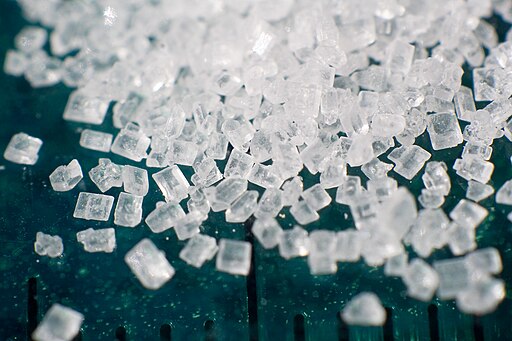
Sugar (sucrose - see photo) contains one molecule of fructose and one molecule of glucose with a chemical formula of C12H22O11. By enzymatic action, our body breaks down sucrose into these two monosaccharides during digestion. The resulting fructose and glucose molecules are then rapidly absorbed into the bloodstream. Glucose is taken up directly into the cells while fructose passes to the liver, where it is metabolized into triglycerides. Sugar 2xmacro
Magnification of grains of refined sucrose

Fructose and glucose are simple sugars with the same chemical formula C6H12O6 although they have different structures (see illustration above). They have five hydroxyl groups (−OH) and a carbonyl group (C=O) and are cyclic when dissolved in water. They each exist as isomers with dextro- and levo-rotatory forms that cause polarized light to diverge to the right or the left. The dextro- isomers (e.g. dextrose) are the ones commonly found in nature. Fructose, or fruit sugar, occurs naturally in fruits, some root vegetables, cane sugar and honey and is the sweetest of the sugars. It is the primary component of high-fructose corn syrup, which is manufactured from hydrolyzed corn starch. Glucose, or dextrose, occurs naturally in fruits and plant juices and is the primary product of photosynthesis. Most ingested carbohydrates are converted into glucose during digestion and it is the main form of sugar that is transported by the bloodstream. It can be manufactured from starch by enzymatic hydrolysis.

The average person consumes about 75gm of refined sugars each day, equal to 15 teaspoonfuls. At 4 calories per gram, this is and extra 300 calories a day! This is more than double the recommended allowance. Since the latter part of the twentieth century, it has been questioned whether a diet high in sugars, especially refined sugars, is good for human health and may potentially be a cause of obesity.

Much ado has been made of sugar but most other natural sweeteners are also a combination of glucose and fructose. Sucrose is 50% glucose and 50% fructose. Honey, Agave nectar, invert sugar and high fructose corn syrup all contain similar mixtures of these two simple sugars. Substituting one of these for sugar still results in the same number of extra calories. We will cover these alternative natural sweeteners (and others, including artificial sweeteners) in subsequent blogs.

One main concern with excessive intake of these sugars is their metabolism. Glucose is mainly used directly as a source of energy and causes the release of insulin into the bloodstream. Insulin is required for cells to absorb glucose. Chronic excess glucose in the bloodstream is call hyperglycemia. Excessive sugar or glucose intake can lead to obesity and Type 2 Diabetes. Fructose does not affect insulin levels and is metabolized mainly in the liver and is converted into triglycerides. Excess fructose increases the likelihood of fatty liver disease and insulin resistance.

Table 1. Sugar content of selected common plant foods (g/100g)[Ref]
Food Item Total
 Carbs 
Total
 Sugars 
Free
 Fructose 
Free
 Glucose 
 Sucrose   Fructose/ 
Glucose
Ratio
Sucrose
as a % of
 Total Sugars 
     Fruits
Apple 13.8 10.4 5.9 2.4 2.1 2.0 19.9
Apricot 11.1 9.2 0.9 2.4 5.9 0.7 63.5
Banana 22.8 12.2 4.9 5.0 2.4 1.0 20.0
Fig, dried 63.9 47.9 22.9 24.8 0.9 0.93 0.15
Grapes 18.1 15.5 8.1 7.2 0.2 1.1 1
Navel orange 12.5 8.5 2.25 2.0 4.3 1.1 50.4
Peach 9.5 8.4 1.5 2.0 4.8 0.9 56.7
Pear 15.5 9.8 6.2 2.8 0.8 2.1 8.0
Pineapple 13.1 9.9 2.1 1.7 6.0 1.1 60.8
Plum 11.4 9.9 3.1 5.1 1.6 0.66 16.2
     Vegetables
Beet, Red 9.6 6.8 0.1 0.1 6.5 1.0 96.2
Carrot 9.6 4.7 0.6 0.6 3.6 1.0 77
Corn, Sweet 19.0 6.2 1.9 3.4 0.9 0.61 15.0
Red Pepper 6.0 4.2 2.3 1.9 0.0 1.2 0.0
Onion, Sweet 7.6 5.0 2.0 2.3 0.7 0.9 14.3
Sweet Potato 20.1 4.2 0.7 1.0 2.5 0.9 60.3
Yam 27.9 0.5 trace trace trace na trace
Sugar Cane 13-18 0.2-1.0 0.2-1.0 11-16 1.0 high
Sugar Beet 17-18 0.1-0.5 0.1-0.5 16-17 1.0 high

The best way to get sugars into your diet is naturally. Refined sugar is considered to be just empty calories and it lacks the nutrients that could be obtained by getting our daily allowance from fruits and vegetables. As you can see from the table above, many fruits and vegetables are good, balanced sources of sugars. Avoid sugary soft drinks and even many fruit juices and smoothies as they are heavier in sugars than the raw fruits and many have added sugars. God gave us the plants for food, enjoy them as close to their natural state as possible!

Genesis 1:29 (NLT) Then God said, “Look! I have given you every seed-bearing plant throughout the earth and all the fruit trees for your food.

Proverbs 24:14 (NLT) In the same way, wisdom is sweet to your soul. If you find it, you will have a bright future, and your hopes will not be cut short.

Friday, January 15, 2016

The Chemistry of Pruning

Nowadays everyone wants to eat more healthy, get fresh produce, and go to farmer’s markets or specialty grocers, searching for organic fruits and vegetables.

Many are even digging up their lawns and landscapes to plant small gardens at home, just to get the freshest produce they can find. Some will grow just a few things like herbs and tomatoes. Others will plant a massive spread to fill their tables.

Want luscious tomatoes, juicy apples or prize-winning pumpkins growing in your garden? It doesn't matter if you want to grow a tree, shrub, or vine, flowers, fruit or vegetables, you need to prune your plants. Trim and thin. Increase the symmetry and the yield. By proper pruning you will be able to make your plants healthier, more productive and more attractive.

To prune you need to do these four things:

  • Trim the dead wood
  • Thin out the extra growth
  • Cut out the suckers
  • Snip back to a bud

When trimming the dead branches, any time of year is fine. Cutting back the dead to live foliage will generally stimulate more shoots and help to shape the plant.

Thinning out dense growth, be it clearing weaker branches or removing excess edible produce, lets in more sunlight to the remaining vegetation. This gives the plant more energy to grow. Select the biggest and best of the yield, snipping off the rest.

Suckers “suck” the life from the plant and can take away from the beauty or the bounty. They tend to be weaker and less productive than the main shoots and should be removed.

Finally, clipping to a bud reduces extraneous shoots and gets the growth started again quickly. This also encourages more blooms.

All of these techniques focus on making the plant more beautiful and productive, increasing the harvest or the appearance of the plant.


…nothing in all creation will ever be able
to separate us from the love of God…
Romans 8:39 (NLT)

In much the same way God prunes the ones He loves to make them more fit for His Kingdom and His work. Jesus even referred to Himself as part of the plant from which we grow.

In John 15:2 (NIV) Jesus says: “He cuts off every branch in me that bears no fruit, while every branch that does bear fruit he prunes so that it will be even more fruitful.”

And in John 15:5 (NIV) Jesus says: “I am the vine; you are the branches. If you remain in me and I in you, you will bear much fruit; apart from me you can do nothing.”

God tells us what fruit He wants us to bear for His Kingdom, the fruit of the Spirit:

Galatians 5:22 (NIV): The fruit of the Spirit is love, joy, peace, forbearance, kindness, goodness, faithfulness, gentleness and self-control.

So that we can live worthy of Him:

Colossians 1:10 (NIV): So that you may live a life worthy of the Lord and please him in every way: bearing fruit in every good work, growing in the knowledge of God,

God directs us, through repentance and by faith, to yield good fruit for His harvest.

Matthew 3:8 (NIV): Produce fruit in keeping with repentance.

Matthew 12:33 (NIV): “Make a tree good and its fruit will be good, or make a tree bad and its fruit will be bad, for a tree is recognized by its fruit.”

John 15:8 (NIV): This is to my Father’s glory, that you bear much fruit, showing yourselves to be my disciples.

The Greek word for “prune” is “Kathairō” which means “to cleanse of impurities.” God does a good work in us so we may be clean and He will continue it until all impurities are gone.

He who began a good work in you will carry it on to completion until the day of Christ Jesus. - Philippians 1:6 (NIV)

There is nothing that can take away His love for us.

Romans 8:39 (NLT): …nothing in all creation will ever be able to separate us from the love of God…